Handy and Cheap Line Hangers

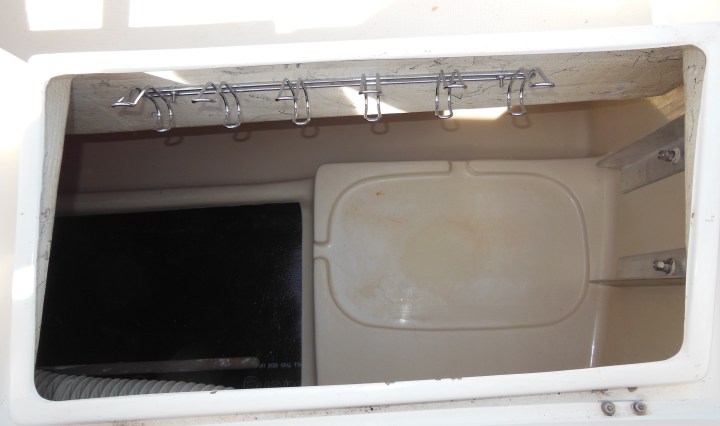
When I first started sailing, I stored all my unused lines, sheets, and cords in a large plastic bag in the starboard lazarette. I knew there was a better way to organize them, but I hadn’t seen it yet. First, I came across some teak line caddys. And while I liked their design and the fact that the teak would look at home in Summer Dance, they wouldn’t afford a lot of storage for the amount of space that they would occupy. In a C-22, you have to maximize every cubic inch.

Continue reading “Handy and Cheap Line Hangers”

How to Rig a Cruising Spinnaker in 4 Stingy Stages

If you don’t have a spinnaker for your sailboat yet, aren’t you a little envious of those big, colorful, billowing sails you sometimes see at your favorite cruising spots? Nothing says, “Yeah, we’ve got this!” quite like a racing or cruising spinnaker. It’s as though the sailboat is puffing its chest out with confidence and strength. No wonder it’s called the fun sail.

In this post, I describe the strategy I used to get started with an asymmetrical spinnaker. You can use the same strategy with a symmetrical spinnaker but the cost is higher due to the required whisker pole and its control lines.

Continue reading “How to Rig a Cruising Spinnaker in 4 Stingy Stages”

Sew This Jib Sock to Protect Your Furled Headsails

If you install a cruising furler like I describe in Headsail Furlers For the Trailer Sailor and you don’t also add sacrificial cover strips to the leech and foot of your headsails, those edges of your sails will be constantly exposed to UV sunlight and the weather and will deteriorate much faster than the rest of the sails. Having a sail loft add sacrificial strips can be expensive, particularly if you have it done it to multiple sails, say, your jib and a genoa. An alternative solution is to make this DIY jib sock. You can use it to protect whatever sail you have on your furler and at a fraction of the cost of sacrificial strips.

Continue reading “Sew This Jib Sock to Protect Your Furled Headsails”

Make This Easy And Elegant Wine Glass Rack

This project is sure to be a hit with the ladies. It’s easy to make, increases your storage capacity, and it adds a touch of class to any cabin. The glasses don’t slide around or clink together like other racks, even in rough sailing conditions or going down the road. The glasses are easy to remove for serving your favorite vino by sliding the glass out from between the flexible shock cord “clamps.” You can mount the rack on the underside of a cabinet, a shelf, or even the cabin ceiling.

Continue reading “Make This Easy And Elegant Wine Glass Rack”

No Furler? Make a Foredeck Sail Bag

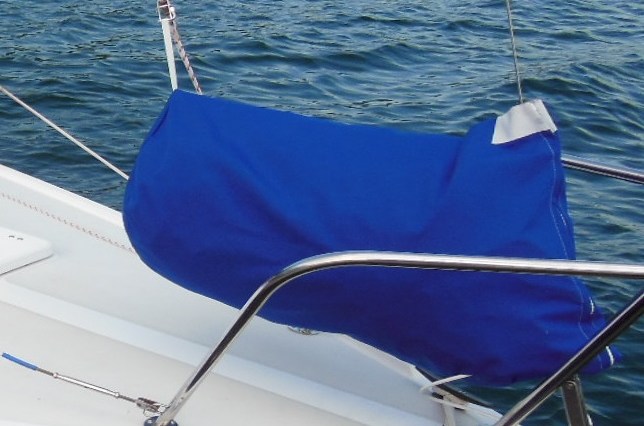
If you have a headsail furler on your sailboat, this project will probably be of little interest to you. But if you have hank-on headsails and want convenient protection for them like the sacrificial covers on furled headsails, read on.

A foredeck sail bag is something of a luxury for the trailer sailor. It’s not necessary to sail and unless you spend considerable time with the headsail doused, it’s not of much use to a trailer sailor. But if you like to cover your sails overnight or if you keep your sailboat in a slip and you don’t want to remove and stow the headsail during that time, a foredeck sail bag can be handy and save you setup time.

Continue reading “No Furler? Make a Foredeck Sail Bag”

Refinish Your Swing Keel for Best Performance – Part 1: Removing

Does your swing keel look like it has leprosy? Does it make a disturbing klunking sound when you switch tacks? If it has exposed rust, do you know for a fact that it is not extensive? Would you be surprised to learn that the swing keels of many older C-22s are not properly shaped to minimize drag and have major casting defects under the paint? Want to learn how to refinish a metal swing keel for best performance and the lowest cost? And by best performance, I mean speed, pointing ability, and durability. If you can answer yes to any of these questions, you need to read on.

Continue reading “Refinish Your Swing Keel for Best Performance – Part 1: Removing”

The Complete Beginner’s Guide to Ball Valve Maintenance

Do you know where all of the ball valves on your boat are located? Are they all easy to turn? Do they seal completely? Have you ever done any maintenance to them? They’re not maintenance-free. In this post, I will dispel any mystery about how ball valves work and walk you step-by-step through how to take one apart, inspect it, and lubricate it.

Continue reading “The Complete Beginner’s Guide to Ball Valve Maintenance”