How to Rig a Cruising Spinnaker in 4 Stingy Stages

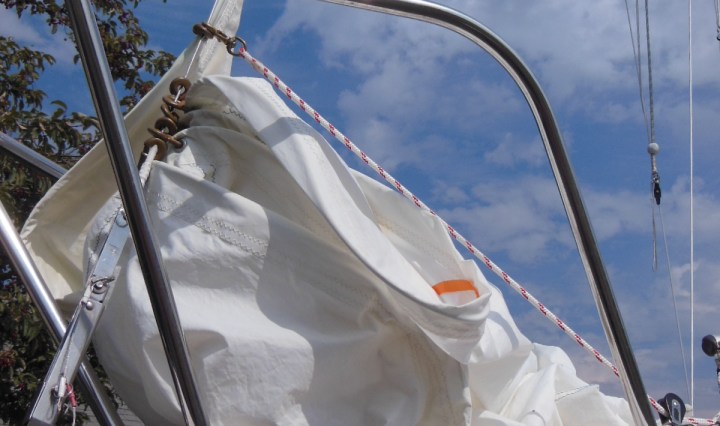
If you don’t have a spinnaker for your sailboat yet, aren’t you a little envious of those big, colorful, billowing sails you sometimes see at your favorite cruising spots? Nothing says, “Yeah, we’ve got this!” quite like a racing or cruising spinnaker. It’s as though the sailboat is puffing its chest out with confidence and strength. No wonder it’s called the fun sail.

In this post, I describe the strategy I used to get started with an asymmetrical spinnaker. You can use the same strategy with a symmetrical spinnaker but the cost is higher due to the required whisker pole and its control lines.

Continue reading “How to Rig a Cruising Spinnaker in 4 Stingy Stages”

Quit Spending Setup Time on Turnbuckles

Turnbuckles are great for tuning your rig but they’re the least convenient way imaginable to loosen and detach the forestay and lower shrouds for unstepping the mast. I vowed long ago that I would quit wasting time on turnbuckles during setup and tear-down.

This post is a companion to my previous post How to step a mast single-handed with or without using the boom as a gin pole. I mentioned quick release levers in that post and you can also see them in use there, but they need more explanation together with the other topics in this post.

Continue reading “Quit Spending Setup Time on Turnbuckles”

The Complete Beginner’s Guide to Winch Maintenance

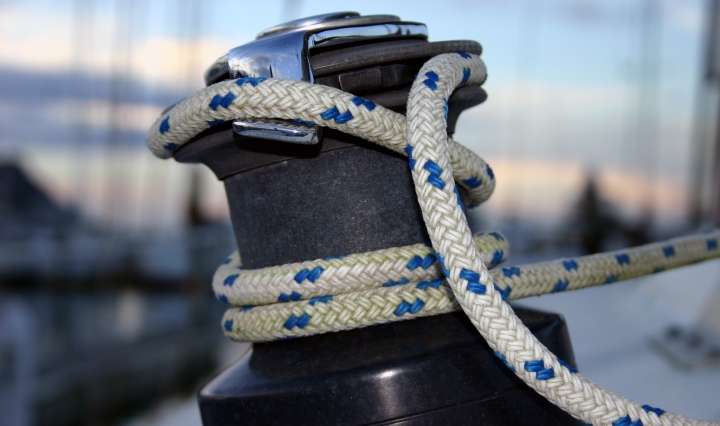
The winches on your sailboat are the workhorses of your rig. They do the heavy lifting and make your job as skipper easier so you can enjoy the ride. They’re also the most expensive hardware aboard so it only makes sense to take good care of them. In this post, I describe how they work and how to maintain them in peak condition. If you’re a beginner to winch maintenance, this post will bring you up to speed with the savviest captains.

Continue reading “The Complete Beginner’s Guide to Winch Maintenance”

Single Line Jiffy Reefing Made Easy

Your ability to reef your mainsail is one of the most important sailing skills that you can learn. Your reefing rigging plays an important part in that. You can do it with just a few short lengths of rope but it will be more time consuming and difficult than it needs to be. That method is not very safe to use during the weather conditions when you’re most likely to need to reef. Having a system of reefing lines in place and ready to use at any time increases your ability to reef smoothly and efficiently (in a jiffy) when conditions warrant it, particularly if you sail single-handed.

Continue reading “Single Line Jiffy Reefing Made Easy”

Lead All Lines To the Cockpit For Safer Sailing

The factory running rigging on most small sailboats, including the Catalina 22, is minimal to keep the price low. That is, the halyards and any other control lines are only long enough to fasten them to nearby cleats. Convenience and trimming for performance are a luxury reserved for larger, more expensive sailboats.

It works okay, but it makes having a crew more of a necessity and it’s not ideal in heavy winds when leaving the cockpit to trim the rigging can be unsafe. For safety and to add more control lines, such as a headsail downhaul, single-line reefing, and boom downhaul without requiring more trips forward, the solution is to lead the lines aft to the cockpit. It’s also a good idea if you ever want to sail single-handed or race competitively.

Continue reading “Lead All Lines To the Cockpit For Safer Sailing”
Foresail pendant

How to Raise Your Foresail with a Pendant

If you regularly sail in a busy bay with other boaters, personal watercraft, kite boards, SUP boards, kayaks, and the like, it can get downright dangerous. Would you like to see forward under your foresail better to avoid a collision? A foresail pendant will help you out. It’s a simple little thing to add to your rigging that will make you wonder why you didn’t think of it before.

Continue reading “How to Raise Your Foresail with a Pendant”